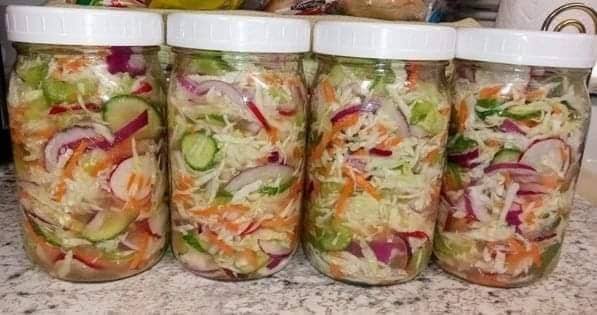
Preserving food at home is one of the most rewarding kitchen traditions you can ever learn, and this special recipe brings rich history directly to your family dinner table. Canning Depression Era Salad is a classic pickling recipe that combines humble garden vegetables like green cabbage, crisp carrots, sweet bell peppers, and fresh cucumbers into a tangy, sweet, and crunchy side dish. Back in the nineteen thirties during difficult economic times, families needed clever ways to keep fresh garden vegetables edible for many long months without expensive ingredients or modern refrigeration. They relied on simple pickling brines made of white vinegar, water, sugar, and salt to turn fresh summer produce into long lasting pantry treasures. Today, home cooks love this traditional recipe because it tastes completely delicious, costs very little money to make, and brings back cozy memories of old fashioned homestead cooking. The bright colors inside the clear glass jars look absolutely beautiful on any kitchen shelf, making you feel proud every single time you see them stacked together.
People absolutely adore this canned salad because it delivers a unique crunch and a sweet, tangy flavor profile that brightens up almost any meal you serve. Unlike soft or soggy pickled items, the shredded vegetables in this mixture retain a lively, satisfying snap even after sitting in the jar for months. The natural sweetness of sliced carrots and bell peppers balances perfectly with the sharp bite of white vinegar and celery seed seasoning. It works wonderfully as a cold side dish, a tangy topping for grilled sausages, a crunchy relish for juicy burgers, or even a refreshing base for summer picnics. Busy parents love having these jars ready in the pantry because you can simply pop open a lid and serve a healthy vegetable portion without doing any cutting, chopping, or cooking on busy weeknights. It saves precious prep time in the kitchen while giving your family wholesome, homemade food free from artificial chemicals, unnecessary additives, or weird factory preservatives.
There are so many wonderful reasons and special occasions to make this timeless pickled vegetable blend in your own home kitchen. Emotionally, cooking a historic homestead recipe connects you to the wisdom and resourcefulness of past generations who knew how to make every single garden vegetable count. It brings a deep sense of self reliance and comfort when you realize you can fill your own food pantry using basic, affordable items from the local grocery store or your backyard garden. From a taste perspective, the crisp texture and mouthwatering vinegar tang act as a perfect palate cleanser alongside heavy, rich foods like roasted meats, pork chops, creamy stews, and grilled cheeses. From a fitness and wellness viewpoint, this light salad is naturally low in fat, high in plant fiber, and packed with valuable vitamins like vitamin C and vitamin A. Eating it helps you fill your plate with low calorie nutrition while keeping your digestive system happy, making it a brilliant addition to any balanced lifestyle.
Learning how to safely preserve this salad using a standard hot water bath canner is much easier than most beginners think. You do not need expensive, fancy kitchen machinery or advanced culinary skills to master the entire process from start to finish. All you need are basic glass jars, fresh whole vegetables, a sharp knife, and a large pot of boiling water to seal everything safely for long term storage. Watching the jars bubble gently in the boiling water bath and hearing the satisfying pop sound of the metal lids sealing tight as they cool down gives you an incredible feeling of accomplishment. Whether you are an experienced home gardener looking to preserve a huge summer harvest or a complete beginner who wants to start prepping healthy food on a budget, this recipe is the absolute best place to start. Let us walk through all the simple ingredients, exact measurements, and detailed step by step instructions so you can create your very own batch today.
Ingredients You Will Need
To make six pint size jars of this delicious preserved salad, gather the following simple and affordable ingredients:
-
8 cups finely shredded green cabbage (about one medium head of cabbage)
-
2 cups sliced carrots (peeled and sliced into thin rounds)
-
2 cups diced sweet green bell peppers (seeds removed)
-
2 cups diced sweet red bell peppers (seeds removed)
-
2 cups thin sliced yellow or white onions
-
2 cups thin sliced fresh cucumbers (with skin or peeled)
-
2 tablespoons coarse canning salt or non iodized sea salt
-
3 cups white distilled vinegar (5 percent acidity strength)
-
2 cups pure water
-
2 cups granulated white sugar
-
1 tablespoon celery seeds
-
1 tablespoon mustard seeds
Step by Step Method
Why This Recipe Is Special
This preserved salad holds a very unique place in culinary history because it represents true kitchen wisdom passed down through generations. During tough economic periods, wasting food was not an option, so home cooks invented smart ways to preserve every single edible piece from their home gardens. They combined affordable cabbage, onions, and root vegetables with basic vinegar and spices to create something that tasted rich, festive, and satisfying. The vinegar brine acts as a natural preservative, preventing bad bacteria from growing while locking in vital nutrients for many months.
Beyond its rich heritage, this recipe is loved today because of its fantastic health benefits and nutritional profile. Cabbage, carrots, and bell peppers are packed with dietary fiber, which supports healthy digestion, keeps your gut feeling great, and helps manage steady energy levels throughout the day. Cabbage also contains powerful plant antioxidants and vitamin C, which help support your body immune system naturally. Because this recipe uses a quick heat processing method, many of the essential vitamins stay trapped inside the jars rather than getting destroyed by hours of heavy cooking.
Another reason people adore this dish is its sheer versatility at mealtime. It serves as a ready to eat salad, a sandwich condiment, a side dish, or an appetizer topper whenever you have unexpected guests. The balance of sweet sugar, sharp vinegar, and aromatic mustard and celery seeds creates a vibrant flavor profile that wakes up simple meals like beans, rice, baked potatoes, or grilled chicken. Knowing you have wholesome food sitting on your pantry shelf made by your own hands brings an incredible sense of peace, security, and pride.
Extra Tips for Better Taste
-
Use fresh, crisp, high quality vegetables free from soft spots or bruises for maximum crunch.
-
Cut all vegetable pieces uniformly so they absorb the pickling liquid at the exact same rate.
-
Use dedicated canning and pickling salt rather than regular table salt to prevent cloudy liquid in your jars.
-
Ensure your white vinegar has a guaranteed five percent acidity level to maintain complete canning safety.
-
Add half a teaspoon of red pepper flakes into the brine if you enjoy a pleasant spicy kick in your salad.
-
Substitute half of the white sugar with honey or apple cider vinegar if you prefer a rich, fruity undertone.
-
Let the filled jars rest in your dark pantry for at least two weeks before opening so the flavors blend fully.
-
Chill the sealed jar inside your refrigerator for a few hours before serving to make the vegetables extra crisp.
Final Thoughts
Making your own canned Depression Era Salad is a joyful, rewarding journey that bridges the gap between traditional historic cooking and modern healthy eating. It takes humble, budget friendly ingredients and turns them into a colorful, mouthwatering pantry staple that your whole family will ask for again and again. You will love the convenience of opening a cold jar on busy evenings, along with the crisp texture and sweet tangy taste packed inside every single bite. Do not be afraid to jump into the world of home canning if you are a beginner, because following simple safety guidelines makes the entire process fun and completely stress free. Grab your cutting board, gather your vegetables, and enjoy creating these wonderful homemade jars of sunshine for your home kitchen today.
Nutrition Details
Here is the estimated nutritional breakdown for one single serving of preserved salad (approximately one half cup portion size):
| Nutrient Category | Amount Per Serving | Daily Value Percentage |
| Calories | 75 kcal | 4% |
| Total Carbohydrates | 17 g | 6% |
| Dietary Fiber | 2 g | 8% |
| Sugars | 14 g | 28% |
| Total Fat | 0.2 g | 0% |
| Saturated Fat | 0 g | 0% |
| Protein | 1 g | 2% |
| Sodium | 320 mg | 14% |
| Vitamin A | 1200 IU | 24% |
| Vitamin C | 35 mg | 40% |
| Calcium | 30 mg | 3% |
| Iron | 0.5 mg | 3% |
Disclaimer
The nutritional numbers and safety information provided in this article are meant for general educational and informational purposes only. Everyone’s body, health conditions, dietary needs, and metabolic responses are completely different, so individual health results may change from person to person. If you follow a strict low sodium diet, manage diabetes, or have specific medical concerns, consult with a qualified health professional or registered dietitian before making significant changes to your meal routine. Always follow proper home canning safety guidelines and ensure your jars seal correctly before storing or eating home preserved foods.