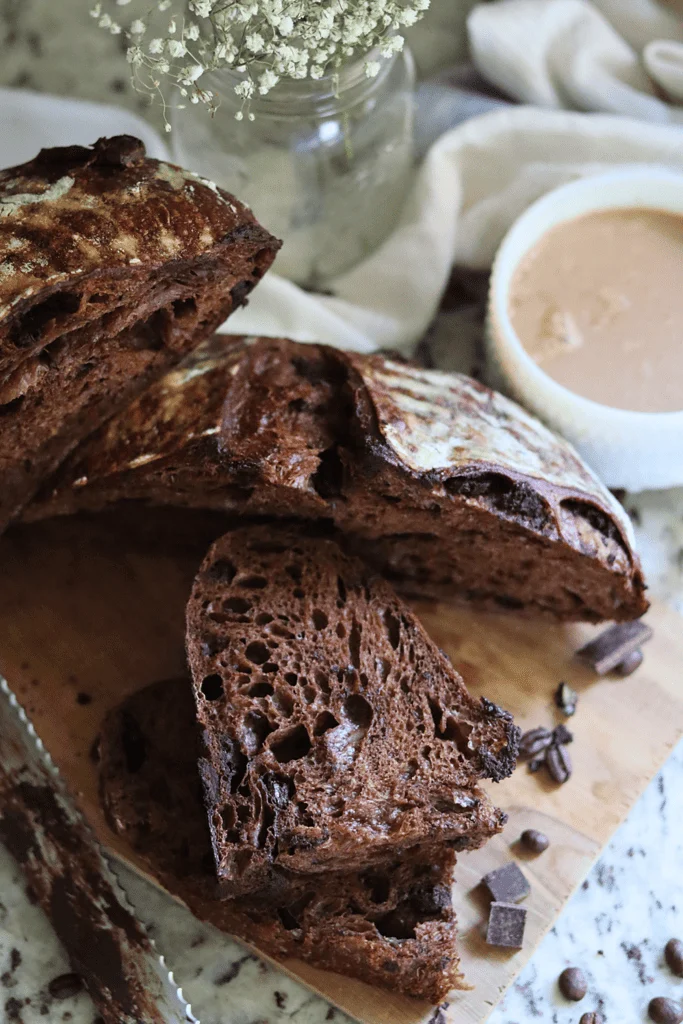
Dark chocolate espresso sourdough is one of the most comforting and rich breads you can ever bake in your own home kitchen. This recipe brings together the deep flavor of dark cocoa powder, the smooth bitterness of freshly brewed espresso, and the natural tangy kick of homemade sourdough starter. Imagine slicing into a warm loaf of bread that has a crisp golden outer skin and a soft fluffy inside packed with small melted chocolate chips. It is not just ordinary breakfast bread, but a delicious homemade treat that feels like something you would buy from an expensive local bakery. When you bake this loaf, your whole house fills with a wonderful warm aroma of dark cocoa and rich coffee that makes everyone feel happy and cozy. Baking this loaf is an amazing journey that lets you slow down and enjoy the art of turning simple natural ingredients into something truly beautiful for your family.
Many people fall in love with dark chocolate espresso sourdough because it offers a perfect balance of sweet and earthy flavors without being overly sugary. Traditional sweet breads are often loaded with refined white sugar, heavy glazes, and artificial flavorings that leave you feeling sluggish after eating. In contrast, this sourdough recipe relies on natural wild yeast fermenting slowly over time to create a deep savory background that pairs brilliantly with dark chocolate. The subtle bitterness of the espresso does not make the bread taste like strong coffee, but instead it enhances and deepens the natural chocolate taste in a clever way. Every single bite gives you a lovely contrast between the dark cocoa dough and the sweet pockets of semi sweet or dark chocolate chips melting in your mouth. Food lovers across the world cherish this recipe because it satisfies dessert cravings while still keeping the wholesome soul of traditional rustic sourdough bread.
There are so many wonderful reasons and special occasions to bake this beautiful chocolate coffee sourdough loaf for your loved ones. You might want to prepare it on a lazy weekend morning when you have extra time to enjoy slow living, or bake it as a thoughtful gift for a friend who loves artisanal food. It is also an ideal choice for healthy living enthusiasts who want a lower sugar treat made with simple whole ingredients that are gentle on digestion. The long sourdough fermentation process breaks down complex gluten and phytic acid, making the grains far easier for your stomach to process while increasing nutrient availability. Eating a slice of this bread toasted with a bit of creamy butter or nut butter gives you long lasting energy without a sudden sugar spike. Whether you need a comforting snack after a long workout or a cozy dessert next to a warm cup of tea, this sourdough recipe always brings joy.
Learning how to bake dark chocolate espresso sourdough is a peaceful and rewarding activity that helps build your confidence in baking. Even if you are a complete beginner who has never handled a sourdough starter before, this recipe is designed to be very approachable and straightforward. You do not need any fancy commercial tools or expert chef techniques to achieve a great result right in your own kitchen. All you need is patience, a active starter, good dark chocolate, and a basic warm place for your dough to rest and rise naturally. As you practice mixing the dark dough and shaping the loaf with your own hands, you will start to understand the rhythm of slow fermented baking. Once you see the magnificent rise and rich color of your finished loaf coming out of the oven, you will feel proud of what you created from scratch.
Ingredients You Will Need
To bake one large loaf of dark chocolate espresso sourdough, gather these simple ingredients:
Active Sourdough Starter: 100 grams (bubbly and well fed) Bread Flour: 400 grams (unbleached high protein flour) Unsweetened Dark Cocoa Powder: 35 grams (high quality) Warm Water: 250 grams Strong Warm Espresso or Coffee: 60 grams Fine Sea Salt: 9 grams Honey or Pure Maple Syrup: 25 grams Dark Chocolate Chips or Chopped Dark Chocolate: 100 grams
Step by Step Method
Step 1: Preparing Your Liquids and Sourdough Starter Start by brewing a fresh cup of strong espresso or dark coffee and let it cool until it is just warm, not boiling hot. Hot liquids can kill the beneficial friendly bacteria and wild yeast in your active sourdough starter, so temperature control is very important. In a large mixing bowl, combine the warm water, warm espresso, honey or maple syrup, and your active sourdough starter. Use a spoon or a whisk to mix these liquids together until the starter completely dissolves into a smooth dark liquid with light bubbles on top.
Step 2: Mixing the Dry Ingredients and Flour In a separate dry bowl, whisk together the bread flour, dark cocoa powder, and fine sea salt until the brown cocoa is evenly distributed through the white flour. Slowly pour your dry flour mixture into the bowl containing your liquid starter mixture. Use a wooden spoon or your clean hands to combine everything together until no dry white flour spots remain in the bowl. The dough will look dark, shaggy, and somewhat sticky at this point, which is completely normal for a hydrated sourdough dough. Cover the bowl with a damp cloth and let it rest undisturbed for thirty minutes so the flour absorbs the liquids smoothly.
Step 3: Performing the Stretch and Folds Instead of traditional intense kneading, sourdough relies on gentle stretch and fold techniques to build a strong gluten structure. After the initial thirty minute rest, wet your hands with clean water so the dough does not stick to your fingers. Reach down under one edge of the dough, gently lift it upward without tearing it, and fold it over into the center of the dough mass. Rotate your bowl ninety degrees and repeat this stretch and fold action on all four sides of the dough. Cover the bowl again and repeat this stretch and fold process every thirty minutes for a total of four rounds over two hours.
Step 4: Incorporating the Dark Chocolate During your third round of stretch and folds, it is time to add your dark chocolate chips or chopped dark chocolate pieces evenly into the dough. Sprinkle a handful of chocolate pieces over the surface of the flattened dough, then perform your standard stretch and fold to trap the chocolate inside. Repeat this step during the fourth round so the chocolate bits are scattered uniformly throughout the dark cocoa dough without clumping in one spot.
Step 5: Bulk Fermentation After completing all four sets of stretch and folds, cover your bowl tightly with plastic wrap or a wet cloth. Place the bowl in a warm draft free spot in your kitchen to let the dough ferment naturally. Let the dough rise until it increases in size by roughly fifty percent, which usually takes between three to five hours depending on your kitchen temperature. Look for visible air bubbles under the dark surface and a soft dome shape on top, which indicates that your yeast is healthy and working well.
Step 6: Shaping the Loaf Gently pour your risen dough out onto a lightly floured clean kitchen counter or wooden board. Using your hands, gently stretch the dough out into a wide rectangle shape, being careful not to pop all the delicate air bubbles inside. Fold the left side of the dough over into the middle, then fold the right side over it like folding a paper letter. Roll the dough up firmly from top to bottom into a round ball or oval shape, creating light tension on the smooth outer skin.
Step 7: Final Proofing in the Fridge Lightly dust a baking basket or a round bowl lined with a clean linen cloth using rice flour or regular flour. Lift your shaped dough ball carefully and place it upside down into the prepared basket so the smooth top rests at the bottom. Cover the basket with a bag or cloth and place it directly into your refrigerator for a cold proof lasting anywhere from eight to sixteen hours. Cold fermentation enhances the unique sour flavor, makes the dough firm for easy scoring, and improves the final texture of the bread.
Step 8: Baking Your Bread Place a Dutch oven pot with its lid inside your oven and preheat the oven to four hundred and fifty degrees Fahrenheit for at least forty five minutes. Take your cold dough out of the fridge and flip it gently onto a piece of baking parchment paper. Use a very sharp blade or razor to make a deep slash across the top of the dough ball to help steam escape evenly while baking. Carefully remove the hot Dutch oven from the main oven, drop the parchment paper with the dough inside, cover with the hot lid, and bake for twenty minutes.
Step 9: Finishing the Bake After twenty minutes, remove the pot lid to lower the steam level inside the Dutch oven. You will see that the loaf has expanded nicely and the score mark has opened up clearly. Reduce your oven temperature to four hundred and twenty five degrees Fahrenheit and bake for another fifteen to twenty minutes without the lid. This allows the outer crust to become dark, crisp, and fully cooked while melting the internal chocolate chips into glorious gooey pockets.
Step 10: Cooling the Loaf Carefully lift the baked sourdough loaf out of the Dutch oven using the parchment paper edges and place it on a wire cooling rack. Resist the temptation to cut into your hot bread immediately, as the internal structure is still cooking and setting from residual heat. Let the bread cool down completely for at least two hours before slicing with a long serrated bread knife for clean, beautiful slices.
Why This Recipe Is Special
This dark chocolate espresso sourdough recipe holds a very special place in homemade baking because it combines delicious indulgence with real nutritional value. Standard store bought sweet breads are usually loaded with artificial preservatives, excessive white sugar, and processed oils that can cause digestive discomfort and rapid blood sugar spikes. By utilizing natural sourdough fermentation, friendly wild bacteria break down hard to digest proteins, lowering the overall glycemic index of the bread while making nutrients like iron and magnesium easier for your body to absorb.
Dark cocoa powder and high quality dark chocolate are rich sources of natural antioxidants known as flavonoids, which support heart health and reduce inflammation throughout the body. The small amount of natural caffeine from real espresso gives your mind a gentle focus boost without causing jittery feelings often associated with sugary energy drinks. Additionally, using natural sweeteners like honey or maple syrup adds a touch of pure sweetness that supports a healthy balanced lifestyle.
The taste profile of this bread is truly unmatched compared to regular dessert loaves. The natural tangy sour note of fermented grain creates a lovely background that balances the rich bitterness of dark cocoa and warm espresso. Every bite offers a contrast of textures, from the crispy dark outer crust to the soft interior filled with warm melted chocolate pieces. It is a sophisticated bread that feels decadent yet remains light and pleasant on your digestive system.
Extra Tips for Better Taste
To make your dark chocolate espresso sourdough taste even more amazing, here are several creative tips you can easily apply in your kitchen. First, try using high quality Dutch processed cocoa powder if you prefer a smoother, less acidic chocolate flavor in the overall dough. If you love a slightly richer sweetness, you can add a small dash of pure vanilla extract into your wet ingredients during the initial mixing step.
Another wonderful variation is adding a half cup of chopped walnuts or pecan nuts alongside your dark chocolate chips during the stretch and fold stage. The crunchy texture and earthy oils of roasted nuts pair fantastically with espresso and rich chocolate, creating a delightful bite every time. You can also sprinkle a light pinch of coarse sea salt flakes right over the top score mark before placing the dough into the hot oven for a trendy sweet and salty flavor contrast.
For an extra rich coffee aroma, try using freshly ground espresso beans instead of instant coffee granules when brewing your liquid base. When serving the baked loaf, slice it thick and toast it lightly in a toaster or pan with fresh butter. Spreading almond butter, peanut butter, or fresh ricotta cheese on a warm slice turns this simple bread into an extraordinary gourmet breakfast or afternoon snack.
Final Thoughts
Baking a fresh loaf of dark chocolate espresso sourdough is a joyful experience that brings warmth, wonderful smells, and incredible deliciousness into your home. It shows how simple raw ingredients like flour, water, salt, cocoa, and wild yeast can transform into an extraordinary loaf of bread through time and love. Do not be afraid if your first attempt is not visually perfect, because sourdough baking is a learning journey that improves with every single loaf you make. Share this warm chocolate bread with your family and friends, enjoy the sweet process, and celebrate the simple simple pleasure of homemade baking.
Nutrition Details
Here is an estimated nutritional breakdown for this dark chocolate espresso sourdough recipe based on a standard loaf yielding ten equal slices:
Nutrition Facts Per Serving (1 Slice / 10 Total Servings)
Calories: 215 kcal Total Fat: 4.5 grams Saturated Fat: 2.5 grams Cholesterol: 0 milligrams Sodium: 210 milligrams Total Carbohydrates: 38 grams Dietary Fiber: 3.5 grams Sugars: 7 grams Protein: 6 grams Iron: 2.2 milligrams Calcium: 20 milligrams
Disclaimer
This recipe and the accompanying nutritional information are provided strictly for general informational and educational purposes. Everyone’s body, health conditions, metabolic rate, and dietary needs are unique, so individual nutritional outcomes and digestibility can vary from person to person. If you have specific dietary restrictions, gluten sensitivities, or medical conditions, please consult with a qualified health professional or registered dietitian before introducing new foods into your regular routine.